Biography
Donna Barton Brothers has spent nearly four decades at the highest levels of Thoroughbred racing—as a successful professional jockey, an award-winning television broadcaster, and an advocate for the horses and people who make the sport possible. After retiring from an accomplished riding career in 1998, she spent 26 years with NBC Sports, becoming one of the most recognizable and respected voices in horse racing. She retired from broadcasting in May 2026 but remains actively involved in the sport through philanthropy, advocacy, and public speaking.
Donna was born into horse racing. Her mother, Patti Barton, was one of the first half-dozen women licensed as a jockey in the United States—in 1969. Throughout Patti Barton’s career (and until four years after her retirement), she led the nation in wins as a female rider. Patti retired from racing in 1984 with just over 1,200 wins.
Both Donna’s brother, Jerry, and sister, Leah, were jockeys, but by the time Donna started riding professionally in 1987, her mother, brother, and sister had all retired from riding. That’s when Donna’s racing career took off. She rode from 1987 to 1998 and retired in 1998 as the second-leading female jockey in the United States by money earned. She won 1,130 races and earned more than $18 million in purse money.
Donna’s Early Years (click to enlarge)
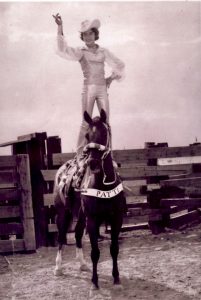

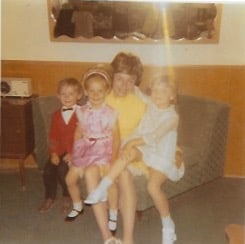
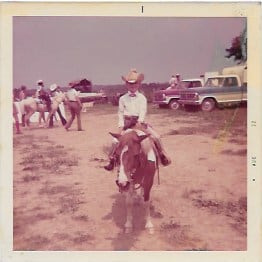
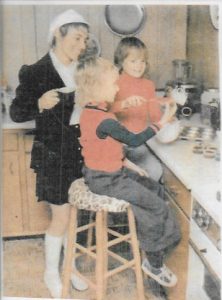
In 1999, she began dabbling in television commentary, and in 2000, she began working for NBC Sports as a sports analyst and reporter, covering the Breeder’s Cup World Championships, World Equestrian Games, PBR World Championships, Kentucky Three-Day Event (formerly Rolex Kentucky Three-Day Event), the Triple Crown races, and more. She covered 26 consecutive Kentucky Derbies and the two historic Triple Crowns of 2015 and 2018, when American Pharoah won the Triple Crown (2015) for the first time in 37 years, followed three years later by Justify’s domination of the Triple Crown races in 2018! Brothers retired from broadcasting in May 2026.
“Brothers plies her trade not on the sidelines but on a saddle, as NBC’s on-track reporter for horse racing. Year after year, she does excellent work, interviewing jockeys before and after Triple Crown races, always with an eye toward providing information for viewers.”
(Excerpt from Sports Illustrated. For the full story click here.)
Brothers also wrote Inside Track: Insider’s Guide to Horse Racing, published in 2011 and updated in 2014, 2020, and again in 2025. The book bridges the gap between novice horse racing fans and the sometimes complicated ins and outs of thoroughbred racing. The book is now in its fourth edition. In 2014, Donna was honored by Sports Illustrated Magazine when she was awarded Best Sideline Reporter of the Year for her on-track reporting.
Just as Donna transitioned from a horse-crazy kid to a professional jockey, she later moved from riding horses to telling the stories of horses and their human connections on live television. Today, she continues to draw upon a lifetime of experiences with horses and people through storytelling, advocacy, and her involvement with organizations dedicated to improving the lives of both.
An experienced keynote speaker, Donna selectively accepts speaking engagements that align with her experiences and interests. For inquiries, please contact her at donna@donnabrothers.com.
Giving Back: Donna strongly believes in giving back to the horses that built her career and livelihood. 100% of the proceeds from her book sales go to the Thoroughbred Aftercare Alliance. She is also an active board member of the Thoroughbred Aftercare Alliance and the Brain Injury Alliance of Kentucky, and Co-Chair of their annual BIAK Brain Ball. Her mother, Patti Barton, suffered a career-ending brain injury in 1984 (a horse racing accident), and Brothers incurred seven concussions throughout her professional riding career, so brain health and brain-injury prevention are important to her.
Donna is also a former board member of the Backside Learning Center. She continues to advocate for the Backside Learning Center through fundraising efforts.
Away from the racetrack, Donna enjoys spending time with her husband, Frank, and their dog, Action Jackson. An avid skier, hiker, yoga enthusiast, reader, and traveler, she rarely passes up an opportunity for a new adventure. She is also an active member of the Louisville Ski Club, where she enjoys the camaraderie of people who share her enthusiasm for outdoor activities and travel.

These are some of my favorite photos from this week’s trip to the Red River Gorge. I think living here in Kentucky, and from Louisville, just two hours from the Red River Gorge, we forget just how lucky we are. What a blessing it is to be able to share this place with friends and family.
Made it to Keeneland for Opening Day of the Fall Meet with the Louisville Ski Club. This is the first time I’ve been to the track since I retired in May, and it was so much fun to go as a fan! We started with tailgating on The Hill (from 11 to 1:30), before heading up to the track to spend the day in the Keeneland Club. While we dodged raindrops intermittently throughout the day, it was much better than the 95° weather we had been having, and it didn’t seem to dampen anyone’s fun. The racetrack has been my “office” since 1987, when I rode my first race. It was nice to enjoy racing as it was meant to be—as a fan. Doing it with friends made it even better!
The 99%: The Work Behind the Winner’s Circle Everyone remembers the trophy presentation, the major victory and the career-defining moment. But what about the 99% that came before that? This panel brings together winners of some of horse racing’s biggest races to share their paths to success: the early mornings, long hours, setbacks, near misses, and lessons that shaped their perspective. Through candid stories and reflections, they’ll explore the perseverance, mentorship, adaptability, and resilience it takes to build a lasting career in racing. Because while everyone remembers the 1%, the lessons are found in the 99%. Go to rtip.arizona.edu/symposium/2026-symposium to learn more.
My final post from Alaska! After our cruise, we went on to Denali National Park by way of an overnight stay at the Alyeska Resort (ski resort—no skiing this time of year). We also stopped by Martin Buser’s Happy Trails Kennel and met the dogs 🐶🐶🐶! Buser is a four-time Iditarod champ (1992, ’94, ’97, and 2002), and has competed in it an astounding 39 times 🤩! It was easy to see that he loves his dogs, that they were well cared for, and that they love what they do. We also got to meet a brand new litter of pups 🥰. From there, we moved on to Denali, where I took a helicopter ride and landed on Yanert Glacier. The topographical view was beautiful! It’s so easy to see how the glaciers have shaped the terrain (with U-shaped valleys between the mountains, rather than the V-shaped valleys formed by rivers). I was there on September 3rd, but the fall foliage was already out, and it only added to Alaska’s beauty. I got to see another bear 🐻 (from afar—you can barely see it in my photo, but the bus driver had a great zoom lens and we could watch it eating berries—a photo of the screen from his camera is also included), a large and stately caribou, Dall sheep, two Willow Ptarmigans, and a few eagles (none of which I could capture with my camera). We traveled with a great group, all of whom went from the Silversea cruise to this post-cruise land trip. The last day was brutal: literally planes, trains, and automobiles. Left the hotel at 9 a.m. by bus. Bus to train depot in Denali, then a 4.5-hour train ride to Talkeetna. From Talkeetna, back on a bus to Anchorage, where a private car awaited us to go straight to the airport. 11 p.m. red-eye flight from Anchorage to Minneapolis. Landed at 8:55 a.m., then at 10:15 a.m. we were on to Louisville. A tough end to a trip of a lifetime! Grateful ❤️
Sitka, Alaska sits on Baranof Island, and much of Baranof Island (outside the developed Sitka area) is within the Tongass National Forest, a temperate rainforest ecosystem, so most of Sitka is a rainforest, and it is beautiful! In Sitka, we hiked the Mosquito Cove, Muskeg, and the Old Sitka Trail. Despite the misleading name, there are no mosquitoes in Sitka! There are also no snakes, coyotes, or wolves. There are, however, bears. Lots of them. Where there are salmon streams, there are bears. You’ll also see lots of the diminutive Sitka black-tailed deer, bald eagles, sea otters, and mink, among many other smaller animals. And, of course, there are salmon, humpback whales, orcas, and tiny crabs that wash in (and get caught under rocks) during high tide. In the forest, you’ll find lots of little critters like the banana slug (harmless and cute) and red squirrels (like our squirrels, but redheads). Sitka is also where power transferred from Russia to the United States after the Alaska Purchase (for $7.2 million on October 18, 1867). The double-headed eagle of the Russian flag was lowered, and the American flag was furled. On our way from Sitka to Seward, we took a detour to see the Hubbard Glacier. If you look at the water and notice a line of distinction, that’s where the glacial waters meet the salt water. The Hubbard Glacier is one of the few glaciers that is actually expanding! Well, most years, historically speaking. It has been retreating since 2020, but in most years it has accumulated enough snow to expand.
In Skagway, Alaska, Chanda and I hiked the Chilkoot Trail before taking a raft down the Taiya River. I had no idea that this part of Alaska (including Ketchikan and Sitka) is a rainforest! But the topsoil here is very shallow because of the glacier deposits, so trees have to be creative to grow in 8-12” of topsoil. They use an interlocking system of roots where the young trees extend their roots sideways until they find a mature tree’s roots to latch on to. In some cases, saplings grow on top of a fallen, decomposing tree, using it for sustenance. The photo of the mature tree with what looks like a massive hole at its base shows a tree that grew like this. After our hike, our guide was also our river raft operator, and we took a ride down the Taiya River. We saw lots of eagles on the river! Sadly, I had tucked my good camera into my backpack, which was stowed in a waterproof bag under the bench seat that the raft guide was sitting on. And while the raft ride was not over rapids, we were asked to always hold on with at least one hand, so I couldn’t even try to capture them with my cellphone. No photos to prove it—you’ll have to take my word for it. At the end of this evening, we celebrated MY birthday! Yes, it was actually in April. But the cruise—and everyone joining me on it—was everyone’s birthday gift to me for my 60th lap around the sun. So we celebrate!
In Juneau, Alaska, the five of us (Leah, Mackenzie, Vivette, Chanda, and me) began the day with a “glacier photo safari,” which was led by a college student who was uniquely knowledgeable about the wildlife and plant life in Alaska AND photography. We began with a short hike (1-2 miles) to see the Mendenhall Glacier and captured some beautiful scenery along the way. From the Mendenhall Glacier, we moved on to a whale boat adventure and were treated to gold: bubble-net feeding! It’s moving to see a whale in motion and even more magical to see it when feeding as they lunge to the surface, face filled with fish, grab a new breath of air, then their humpback surfaces as they release the air. Lastly, they dive back in, and their tail comes up last. Even more magical than all of that—when they are feeding as a group: that’s bubble-net feeding. A herd of whales circles the herring, keeping the school contained. The “caller” is the whale that dives below the school and emits a loud feeding call at just the right time. The school of herring panics and bunches even closer together. The “bubble blower” positions itself around the school and begins blowing a spiraling ring of bubbles around the herring that acts as a “net.” Finally, the whales gather below the herring, mouths wide open, and accelerate toward the surface. Corralled within the net of bubbles that they won’t swim through, the fish have nowhere to escape. And those of us lucky to be on nearby boats get to witness the surfacing of several whales all at once.
I’ve been remiss in not posting about our Alaska trip sooner, but we were too busy having fun! The cruise to Alaska was my 60th Birthday celebration trip, but my actual birthday was in April; my sister’s was on August 25, and our Mom’s was on September 8, so we celebrated lots of birthdays! Our first stop was Ketchikan, Alaska, where we decided to divide and conquer. Chanda and I did the “Salmon Stream Bears: Land & Sea Encounter” while Leah, Mackenzie, and Vivette did the “Deadliest Catch” Bering Sea Crab Fisherman boat. Frankie got a massage on the ship that day, and Mom, who’s been to Alaska twice before, used the day for R&R. We cruised with Silversea on the Silver Moon.
Summer in Saratoga — another summer spent at Adult Summer Camp. I’ve been late to post, but we went straight from Saratoga to Alaska, so I’m just catching up. Highlights: our third and final Embrace the Belmont event at UPH, seeing Jelly Roll at SPAC, hiking and biking with my friend Dorothy, running the Firecracker 4-miler, hiking with the Albany Ski Club, fire tower hikes, a trip to NYC with Frankie—and seeing “Small” while we were there. The annual Racing and Rosé Miss Scarlett Fashion Show, more hiking, the annual NY Race Track Chaplaincy brunch, Fashionable Fillies (and meeting Maura), the THS Phillip Phillips concert, dinners at Solevo, and spending time with our friends Dorothy and Dan. I love you, Saratoga Springs. We’ll be back soon!
How’s retirement going? So far it’s been a fun and productive summer of reading. I always have at least two books going: one on audio (Audible or Libby), and one that I read-read to wind down at night. These are 15 books I’ve read this summer. The Pillars of the Earth (so good!), The Essentials of Classic Italian Cooking should be mandatory reading. I wish I’d read it 30 years ago. Don’t Call it a Cult and Scarred are both about the fall and rise of the NXIVM (pronounced nexium) cult. Deacon King Kong takes us deep into the lives of the characters in an interracial neighborhood in the late ‘60s, early ‘70s. One of Barack Obama’s favorite books—and one of mine too. The Vanishing Half was named a Best Book by the NYTimes, Washington Post, NPR, People, TIME magazine, Vanity Fair, Glamour, and me. The God of the Woods is set in upstate New York (the general area of the Adirondacks where I regularly hike) and Summer Place to Be is set in Saratoga Springs. Whistler was slow to get off the ground, but ended up being one of my favorite reads, and one that stayed with me. The Four Winds by the iconic Kristin Hannah is just. So. Good. Read it. The Calamity Club may be my favorite book of the summer, although it’s hard to choose. Rounding out my summer reads are: Saratoga Days by Sean Clancy, The Mother Earth Effect, A Life’s Calling by Tom Durkin, and It Ends With Us. So far, I love retirement!